
5 Fun Fall WIC Recipes for the Whole Family
Temas de la publicación
Fall is in the air! Learn more about easy fall pumpkin recipes with WIC.
Más informaciónHear from WIC staff about the different types of support that WIC can offer your family in this recap from our latest Instagram Live event!
On Wednesday, October 7, the National WIC Association (NWA) hosted an Instagram Live event on the WIC: You Got This! Instagram page to celebrate and spread the word about National WIC Enrollment Week (NWEW)! This was a relaxed, conversational way to connect with WIC experts and fellow parents who tuned in from across the country.
Unfortunately, we encountered some technical difficulties that affected our panelists' sound settings during the event. Morgane wasn’t able to participate in the livestream due to audio issues with the streaming platform and has shared her insights with us post-event, which are added alongside the conversation snapshots from the live event below!
Susan Conover, Panelist—Susan is a Manager of WIC Operations for the Cuyahoga County WIC program in Cleveland, Ohio. When Susan joined WIC, she fell in love with the mission, working with participants and with her colleagues. She has been involved in many initiatives and special projects throughout her WIC career and especially enjoys outreach in the community and the farmers market nutrition program. Outside of work, Susan enjoys spending time with family and friends, traveling, and reading.
Lydia Gonwa-Ramos, Moderator—Lydia is the Outreach and Breastfeeding Coordinator for the City of Milwaukee WIC Project in Wisconsin. Lydia began her WIC journey nearly seven years ago as a nutritionist and stepped into her current role about three and a half years ago.
She is passionate about connecting eligible families with the nutrition education, breastfeeding support, and community resources WIC provides. As a mother of three young children herself, Lydia understands firsthand the importance of having a supportive village. She believes that when families have access to the resources and support they need, they are better equipped to build healthier futures for themselves and the next generation.
Bridgette Kinard, PHFE WIC in California; Panelist
Morgane C. Puleikis, Panelist—Morgane is an administrative professional and graduate student in public health. Her interests are epidemiology, genetics, and psychology, with a focus on psychiatric epidemiology specializing in chronic illnesses.
Susan shared that when she graduated with a degree in foods and nutrition and was looking for a position where she could use that knowledge, she started working in a local WIC clinic and really enjoyed it.
Susan felt that “it was where I needed to be. And I stayed there for a while as a nutrition health professional. I eventually moved on to our state WIC office as a consultant and ultimately then ended up in Cleveland, Ohio, as a manager of operations. And I've been here for quite a few years and just continue to find it to be a rewarding opportunity to work with others, helping in the community, helping women, infants, and children looking toward our future.”
Bridgette first started as a WIC client before accepting a role within PHFE WIC in California! She explained that, “Twenty six years ago, I had gotten laid off at my job. And I was coming in for my WIC appointment, and the staff had a flyer posted that said, ‘apply for WIC.’ And so I'm like, oh, my God, I really need a job. So I went the next day to apply, and I got hired. I started off in nutrition program assistance for probably about 13 years. And then from there, I got promoted to be an outreach specialist for PHE WIC for another 13 years. And that's where I've been ever since!”
Morgane's connection to WIC came through work as a graduate student. She is currently working on her MPH and is interested in breastfeeding and women's health. She said, “It wasn't until I became involved with NWA (and work) that I learned of all the wonderful information and resources WIC has to offer.”
Bridgette felt that what is a little underrated or not really talked about is the connection between WIC and EBT (SNAP benefits). She said, “A lot of families are not aware that they can receive both programs at the same time. They feel they can either get one or the other without it affecting either program or have to pay one back. But at WIC, we actually encourage our clients to apply for both WIC and SNAP benefits. Especially with food insecurity, it just kind of enhances everything. And also, WIC and SNAP work well together. She shared, “Once I explain that to the families, they're a little bit like, oh my God, I didn't know. Like I thought I could only get this program versus that one. So we're just trying to let them know that yes, you can receive both programs without it affecting either eligibility!”
Susan shared that the Farmers’ Market Nutrition Program benefits are underrated and said that in her state, “we've been working with that program since 1992, but we still find that some families don't know about their eligibility for that in addition to their WIC benefits. Similar to what Bridgette was just saying, they might not understand that in addition to the cash voucher (monthly CVB benefits) that we are able to provide fruits and vegetables; that they can join us at the farmers market and get those benefits as well.”
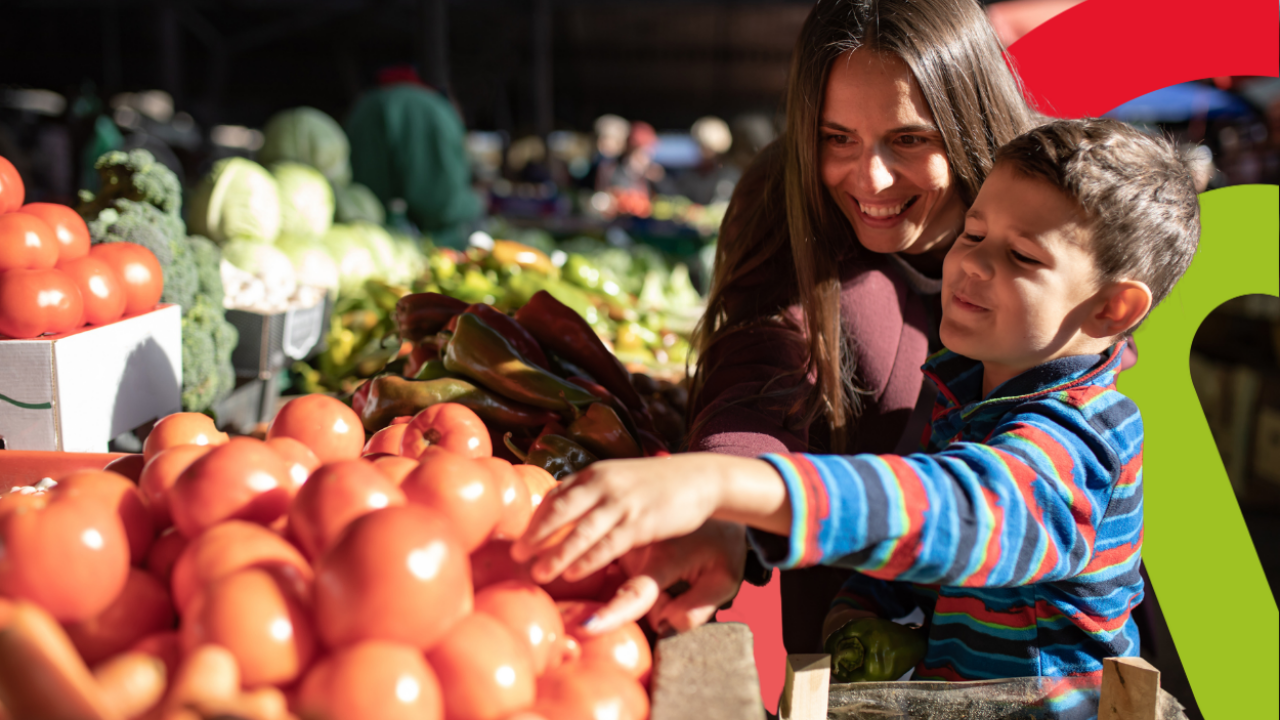
Susan noted that when families do come out and they're surprised, and then you see them carrying away bags of fresh fruits, vegetables, and cut herbs, and shared that “it's just a wonderful feeling to see them tugging those along or seeing a kid carry a melon or something out of the market. And it's fun to ask them about what they're going to do when they get home and enjoy those fruits and vegetables. And I know here in Wisconsin, we're coming near the end of that season. So it's definitely been enjoyable having all those fresh fruits and vegetables when we don't normally get those here in Wisconsin.”
Morgane said that “breastfeeding peer support is something that many do not realize exists within the WIC program, but there are so many educational and emotional support out there. …WIC is also accessible for those in the military.”
Susan said the connection that people need to make sure that they know about WIC is “how much nutrition education and breastfeeding information we have available to support our participants. And we meet participants where they are with that. We're not looking to provide them everything we've ever learned about education and nutrition or in the breastfeeding area, but we can find that place where the participant is ready to learn and to look at that. In my beginning stages of WIC, we did puppet shows for children. So we're able to influence people from early childhood all the way through those pregnancies, postpartum, and breastfeeding periods.”
Bridgette said that one thing that she would like everyone to know about WIC is that “WIC is not just for pregnant moms and infants and children. WIC also supports single fathers. Including grandparents, foster parents—anyone that has legal custody of a child under the age of five.”
She noted that, “We also serve moms that are in their postpartum stage where they may have unfortunately had a loss of pregnancy. We can also serve them for up to six months as well. So we just try to expand our horizons to let everyone know that yes, we are here to support all families—foster families, single fathers, grandparents, and then moms that are postpartum as well.”
Morgane wished that “everyone knew about the nutritional, emotional support that WIC gives to the community and the educational resources that are provided via the WIC clinics.” She shared that whether it is “breastfeeding, general child development, nutritional questions, there are many opportunities out there to support women along their journey through pregnancy and even beyond.”
Bridgette would like to encourage families to apply for WIC regardless of their income. She shared that “a lot of families think, ‘oh, if I'm working, I can't qualify for the program,’ but we do take a lot of working families, not just families that have medical needs. Also, letting them know that it's easy to apply for WIC—we have three ways that you can apply. We can do online appointments, in-person appointments, and video appointments.”
Bridgette noted that “shopping with WIC is easy. We don't have to go to the store and sign our checks. We have the convenience of, we call it secret shopping. So you can still swipe your card, type in your personal PIN number. No one has to know that you're actually using WIC benefits. And it's also safe and confidential. In addition to that, we also have an app that we encourage our families to download. They're allowed to: check their food balance, pre-scan their items at the store to make sure those are WIC-approved items, and check when their next appointment is and what they need to provide for their next appointment. So WIC is easy, WIC is fun, WIC is healthy!”
Susan shared that, “starting something new can be scary. But I think that you would be pleasantly surprised if you took the opportunity to come, and it helps you, your family, not only today, but it can help for years to come because the information we provide today carries with you because we aren't just looking at today. We're looking at health benefits and food benefits that can last you a lifetime and your family!”
Morgane emphasized that with WIC, “women are not alone. There is support out there, and you never have to feel that you are going through this journey without support.”
Bridgette noted:
Susan shared:
Lydia agreed with Bridgette and Susan, sharing that:
Follow us (@WICYouGotThis!) on Instagram to watch the full recording of this year’s #NationalWICEnrollmentWeek Instagram Live!
Mariah Cowsert is a Communications Manager at the National WIC Association. She has nine years of experience in public health communications, with her work ranging from direct social service and affordable housing organizations in DC and her home state of Michigan to supporting sexual and reproductive health education initiatives at a national nonprofit in Baltimore. As someone who grew up in a low-income household in rural Michigan, she knows firsthand that when families have access to quality, healthy foods regardless of their income or zip code, they can not only survive but thrive.
WIC ayuda a familias y niños con alimentos, educación nutricional y apoyo comunitario.
Fall is in the air! Learn more about easy fall pumpkin recipes with WIC.
Más información
Get started with WIC during National WIC Enrollment Week, October 5-9! Learn about the support and resources WIC has to offer your family during an upcoming Instagram Live event on Wednesday, October 7, at 8 pm ET/5 pm PT!
Más información
Averigüe hoy mismo si su familia puede optar a las prestaciones del programa WIC
Empezar con WIC